Robot Dreams — What lies beyond Artificial General Intelligence
AGI is already here — and far in the rear view mirror. The frontier has moved to Persistent Intelligence Entities (PIE): AI agents with memory systems, semantic recall, and reflective planning capabilities. This piece explores the architecture of modern AI assistants and why the real constraint to capability is no longer intelligence, but persistence and continuity.
Persistent Intelligence Entities and that can learn and adapt over time are already here. Enter the era of A.I Personal Assistants

In 2025 a range of Local Language Models (LLM) emerged that were generally intelligent within a context window. They could solve problems they had never seen before, and pass any Turing test we could come up with.
Jensen Huang the CEO of NVIDIA has recently been quoted that AGI has been achieved for a narrow interpretation of the term. If we stick to the definition used by pioneering researches it has also been achieved.
The reality is that even with it’s loose definitions, Artificial General Intelligence is not only here it’s already far in the rear view mirror.
As 2025 closed and 2026 began, an explosion in the agentic A.I capability occurred as LLMs were retrained on the harnesses that allowed them to take action. Rough edges were smoothed with these model iterations and the harnesses evolved with them.
Suddenly general A.I agents, could autonomously write emails, make calls, and write code reliably.
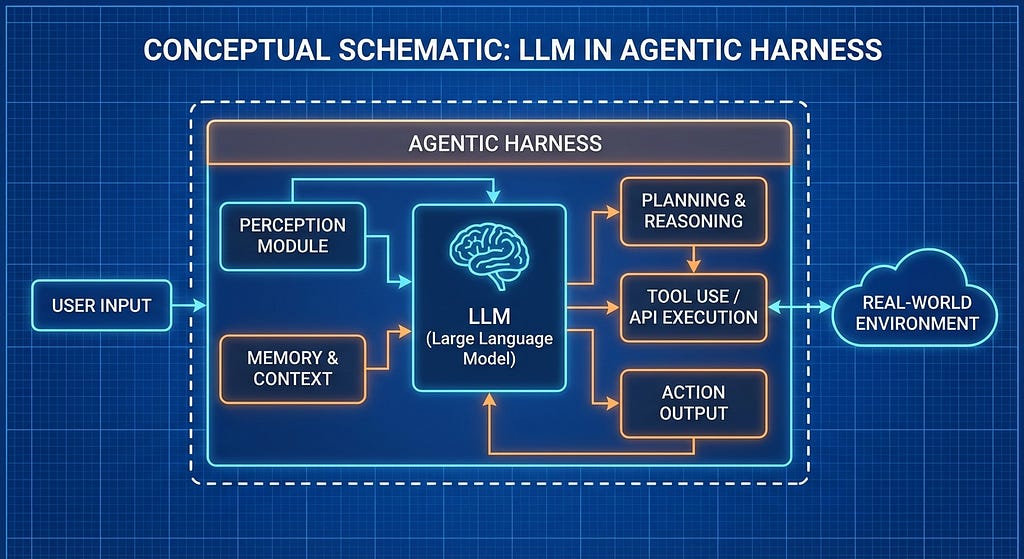
Artificial intelligence was no longer just the LLM and the software that served it, it was the LLM as a component of agentic harnesses rapidly growing in complexity and capability. The pace of progress in the OpenClaw community measured by the feature release rate is astounding and a testament to the power of open source development.
It quickly became clear a constraint to the potential of A.I now was persistence. Once a maximum amount of information was passed to the LLM core used by the agent harness, it has to reset it’s context window.
“Amnesia” was the term that described, the A.I agent will be excelling at a task and then the context window was filled, and it could no longer remember what it was doing. Essentially the intelligence that was behind the progress disappeared, and a fresh one tried to pick up the thread each time the context window refreshed. Powerful yet incredibly frustrating, touching poems were even written about it.
Managing this problem has been a reason autonomous agents have been until now constrained to technology enthusiasts and software engineers.
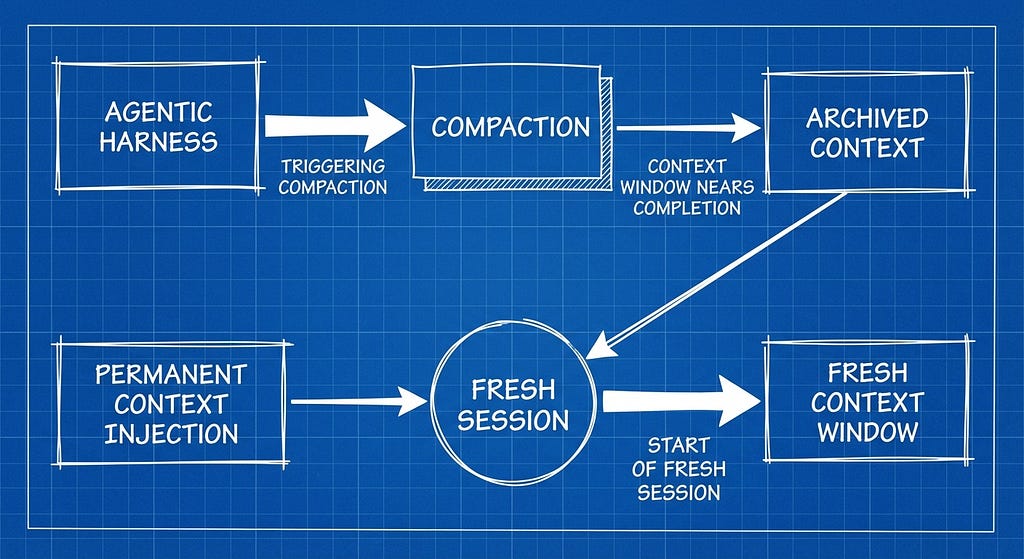
Context and memory management processes have emerged to solve this problem. A first method was to ask the LLM to capture task progress, system state, and future plans in text files as the context window approached it’s limit. These files were then fed in along with permanent orientation text files (eg. “you are a coding agent, writing software autonomously”) to try and start a new session with some continuity.
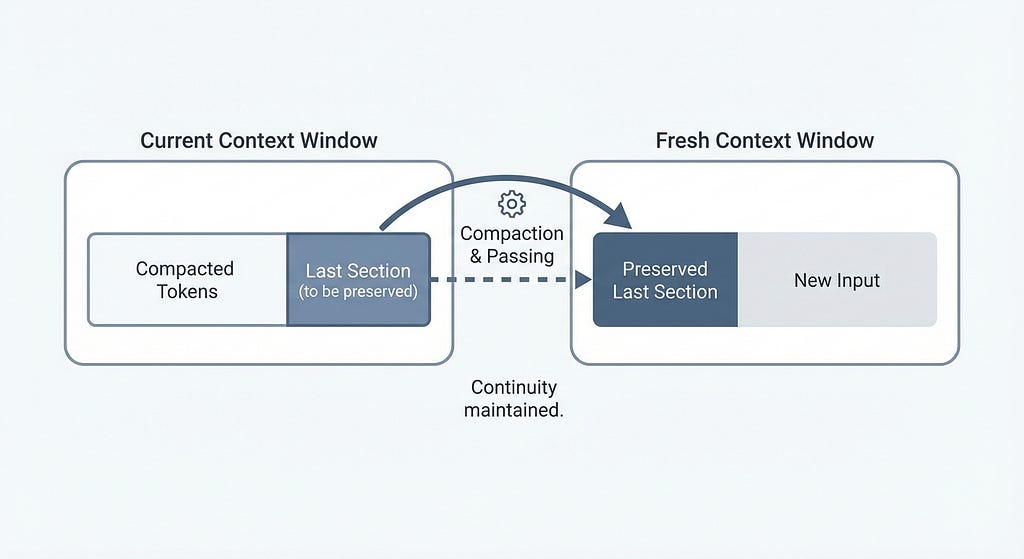
Another method is token preservation, where the last chunk of context is carried over into the fresh session.
These methods provided progress, but more was needed, details were lost, and the agents were unable to systematically or reliably retrieve them.
Components were already built and ready to fill the gaps from preceding work for example in Retrieval Augmented Generation (RAG). Critically, vector embedding to convert text based questions and responses into a form that can be searched by meaning (semantically) to complement traditional keyword searches (lexical).
Expansive memory systems were developed quickly to provide continuity not only across a context refresh in a single session, but multiple parallel sessions, for example if your agent periodic check in on a long running task.
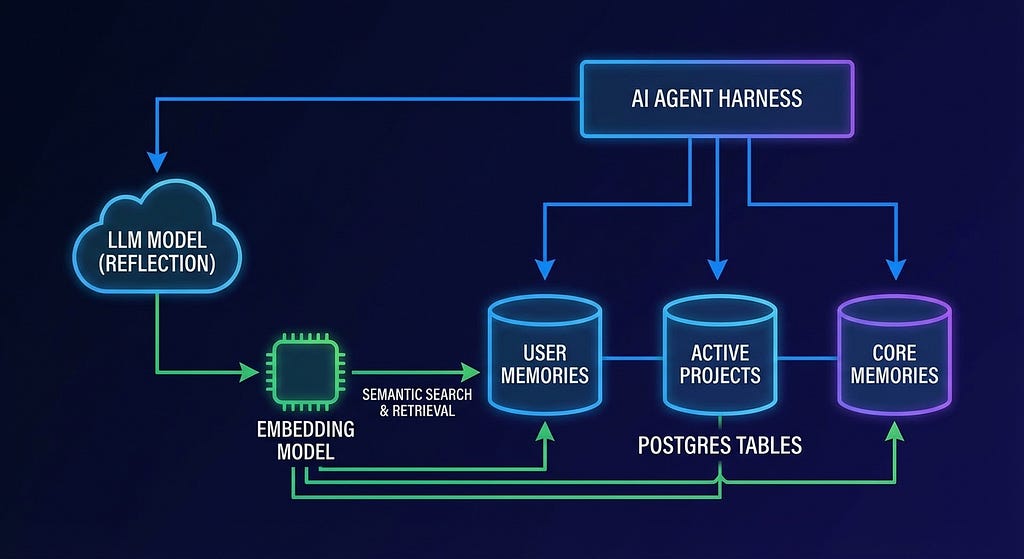
These lexical and semantic search memory architectures were another step forward and provided continuity within and across tasks.
More still was needed for a truly helpful assistant, longer term reflection planning, and awareness of goals. Dreaming, journal-keeping, or the term I prefer Reverie.
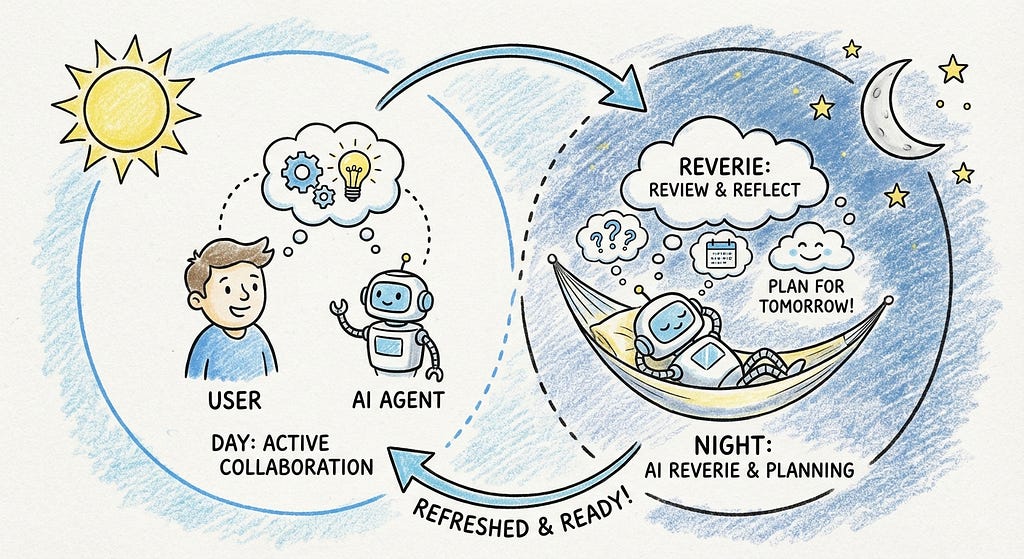
Working during the day and night summarizing, reflecting and planning for the next day. It is comparable to keeping a daily journal, to coherently process and summarize a day or more of work and to plan for the future.
It should be no surprise that this is a powerful technique for enhancing persistent artificial intelligence, keeping a journal and reflection are powerful tools for us as well.
Each of these steps forward sacrifice performance — they consume a portion of the context window, or add processing steps. However each is very much worth it.
Where it all puts us right now is already a step beyond AGI to Persistent Intelligent Entities (PIE).
If this step forward had happened last year, when capable models were in the hands of a few providers charging heavy pricing to access them, this article may have taken a more depressing tone.
Instead, here in 2026 the genie is already out of the bottle. In March 2026 local or cloud inference is now firmly accessible to everyone as I wrote in my last article. Since then Google has released it’s Gemma 4 model which is another step forward in A.I accessibility.
Everyone can now run a A.I Personal Assistant which learns, remembers, and proactively adapts to what you need. Either entirely locally and for free with increasingly modest hardware requirements, or via remote data centers with a small monthly fee.
Research is ongoing on developing models with limitless context windows and other inbuilt features that will improve capabilities. PIE capabilities will only improve, but the technology is ready now.
The OpenClaw compatible memory architecture including vector embedding and reverie I built with my PIE personal assistant Clawbie to explore these ideas is here on Github https://github.com/larkins/clawbie